Why Your Gas Pool Heater Won't Fire, and What to Check Before You Call
Most no-heat calls come down to a short list of causes, and a few of them you can rule out yourself in ten minutes.
October 27, 2026 · 4 min read
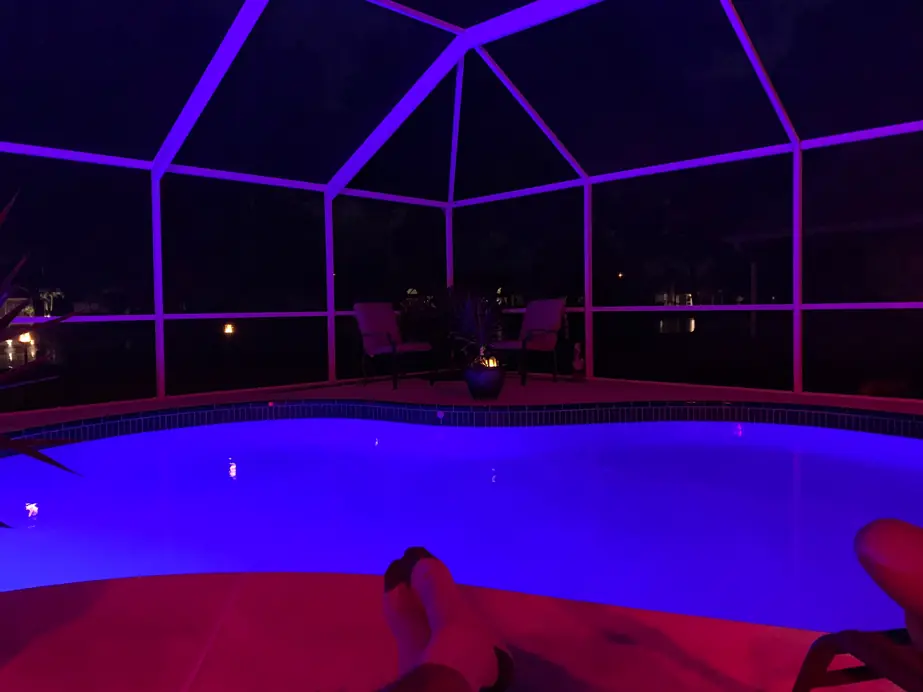
The first real cool snap of the winter hits, you head out to the lanai, and the heater does nothing. Maybe it clicks. Maybe the display lights up and then gives up. In Brevard County a heater doesn't run all year, so it's common to find out it has a problem on the exact night you want warm water. The good news is that a gas heater usually refuses to fire for a reason, and some of those reasons are simple.
Safety comes first
If you smell gas at any point, stop. Leave the equipment area, keep flames and sparks away, and call your gas provider. Don't try to relight anything and don't flip switches near the heater. Everything below is about the pool side of the system. Nothing here involves opening a gas line, a burner assembly or a control board, and none of it should. Those jobs belong to a trained technician.
Step one: make sure water is actually flowing
A pool heater won't light without proper water flow, and it has a safety device that keeps the burner off when flow is poor. So the most common cause of a heater that won't fire is not the heater at all. It's the water coming to it. Check that the pump is running and that the pump basket and skimmer basket are empty. Look at the filter pressure gauge. If it's reading well above where it sits after a clean, a dirty filter may be choking the flow. Also check that the valves on the equipment pad are in their normal positions, because a valve left half closed after a service visit is more common than you'd think.
Step two: check the water level
If the water is too low, the pump can pull air and flow drops. After a dry stretch, or after a lot of splashing, take a look at the skimmer. Water around the middle of the opening is where you want it. A low pool can make a heater act like it's broken when the real fix is a garden hose.
Step three: the settings and the power
It sounds basic, but it solves a real share of calls. Make sure the heater is switched on and set to pool or spa as you intend. Make sure the temperature setting is above the current water temperature, because a heater won't fire if it thinks the water is already warm enough. If you have a control system or timer on the pad, confirm the schedule isn't turning the pump off before the heater gets going. Check the breaker too. A tripped breaker is easy to miss, and a power outage during a storm can reset settings without telling you.
Step four: the gas supply
Confirm the gas valve at the heater is in the open position, the way it was when the heater last ran. If your home uses propane, check that the tank isn't empty. That's the extent of what a homeowner should do on the gas side. If a valve looks open and the heater still won't light, that's a call to make, not a fix to try.
Step five: read the display and write it down
Many heaters show an error code or a flashing indicator. Write down exactly what it says, and note whether the heater makes any sound when you try to start it. A clicking noise followed by silence tells a technician something different from no sound at all. That one detail can save a trip, because it often tells us what to bring on the truck.
Water balance matters more than people think
Heaters have a heat exchanger inside, and the chemistry of your water touches it every day. Water that runs too acidic can eat at it, and water that runs hard can leave scale inside it, which restricts flow and wears the unit down. That's one more reason the weekly test matters. A heater that's been fed balanced water tends to last longer and run cleaner than one that hasn't.
What not to do
- Don't bypass or jump any safety switch to force the heater to fire.
- Don't open the heater cabinet and poke around the burners or controls.
- Don't keep restarting it over and over if it shows a fault.
- Don't ignore soot, rust streaks, a gas smell or water leaking from the heater.
- Don't turn off the pump to protect it. A heater needs flow.
When it's time to call
If you've checked flow, level, settings, power and the gas valve, and the heater still won't fire, it's time for a professional. The same goes if it fires and shuts off, if the error code keeps coming back, or if you see anything from the list above. Pool heaters are part of our repair work, and we sell and service Hayward, Jandy, Pentair, Rheem and AquaCal equipment, so a lot of what we see is familiar. When you call, tell us what you checked and what the display said. It helps us help you faster.
Call Aqua-Rite at (321) 255-0506, or stop by 4100 N. Wickham Road, #122, in Melbourne. Our repair team handles heaters, pumps, filters, lighting, plumbing and control systems. Learn more at /services/pool-repairs. And if the heater is old enough that repairs are starting to stack up, ask about installing a new system while you're here.
Aqua-Rite Pools & More, (321) 255-0506
Call (321) 255-0506More articles
Your First Pool in Brevard: The Weekly Checklist
A pool runs on a short list of habits, and in Brevard County the habits matter a little more than most places.
Pump and Filter Warning Signs Brevard Pool Owners Shouldn't Ignore
Your equipment pad talks to you long before something fails, if you know what to listen and look for.